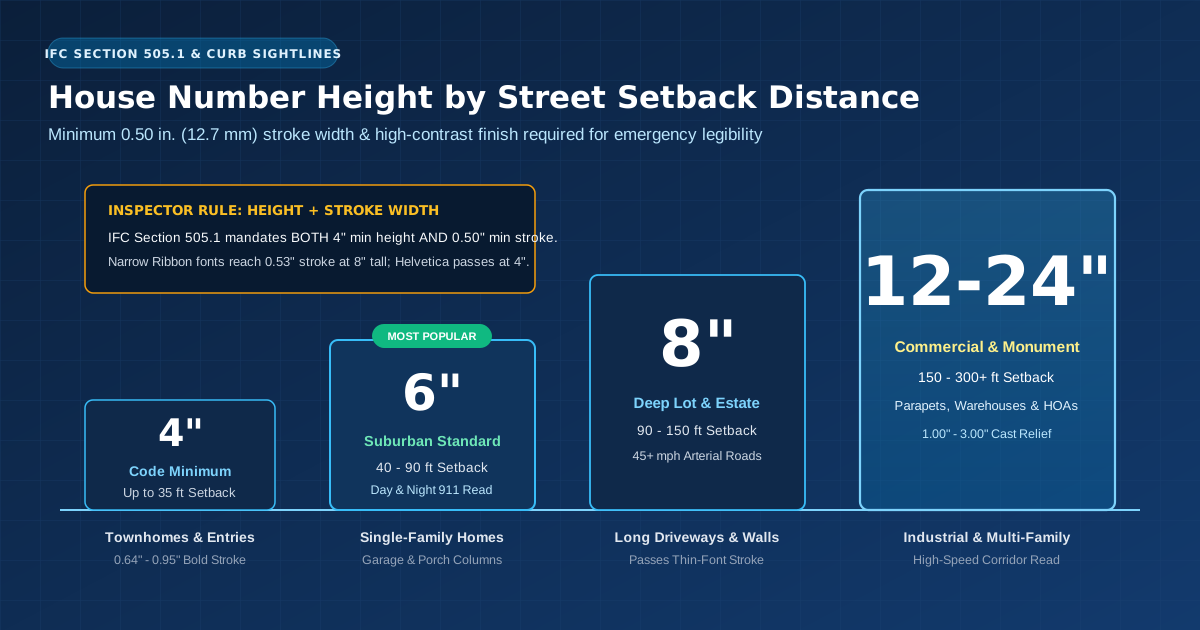
House Number Size Guide: Street Setback Math & Fire Code Visibility Rules
Why 4-inch numbers pass code on townhomes yet disappear at 75 feet—plus exact stroke-width math and setback sizing tables from 4" to 24".
Practical specifications from our U.S. foundry specialists covering International Fire Code visibility standards, solid cast aluminum vs. architectural bronze alloys, marine-grade anodized finishes, and concealed-stud masonry mounting.
Why 4-inch numbers pass code on townhomes yet disappear at 75 feet—plus exact stroke-width math and setback sizing tables from 4" to 24".
Why 4-inch numbers pass code on townhomes yet disappear at 75 feet—plus exact stroke-width math and setback sizing tables from 4" to 24".
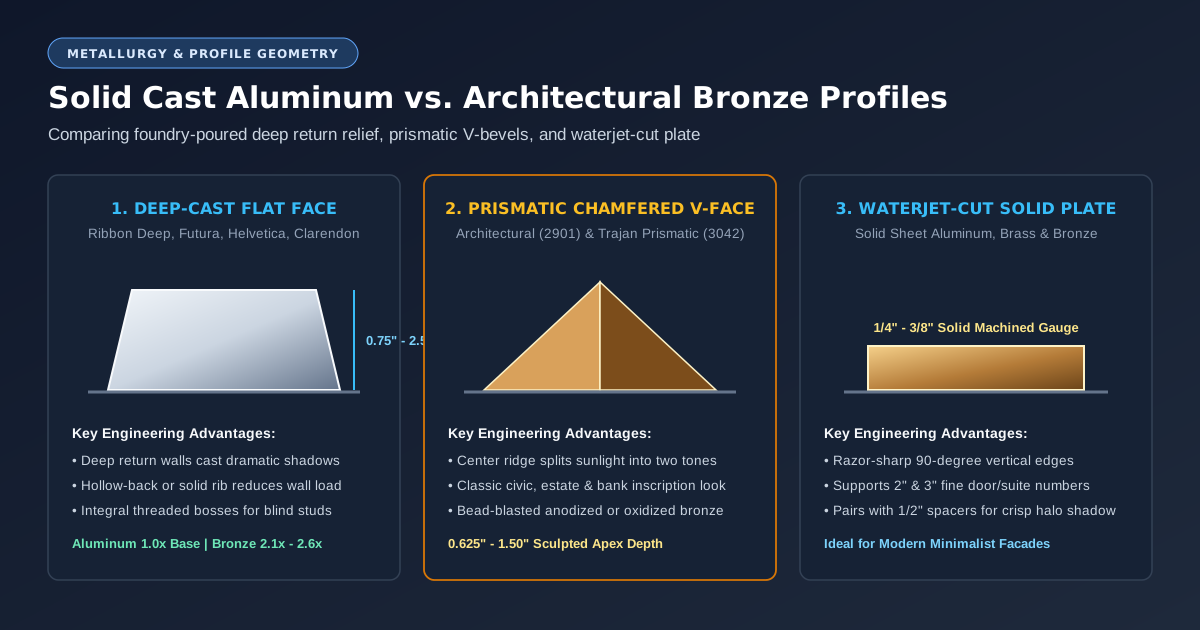
Understand how foundry-poured deep return relief, chamfered prismatic V-faces, and precision waterjet-cut brass or aluminum differ in heft, shadow depth, and cost.
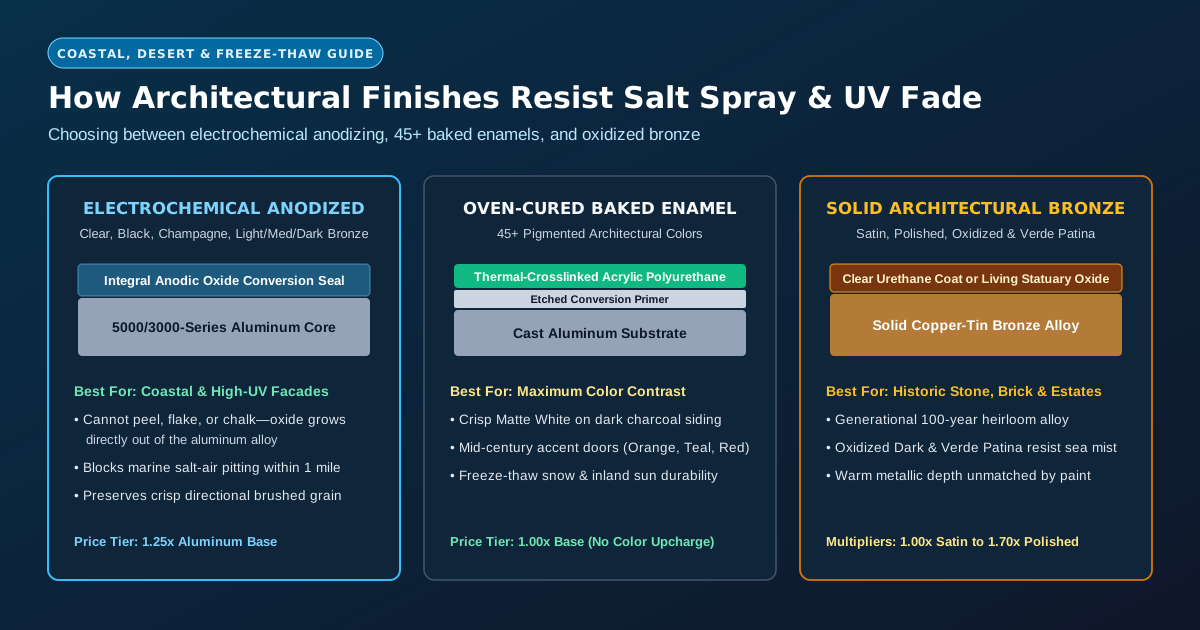
How electrochemical anodizing, oven-cured baked enamel colors, and statuary oxidized bronze perform within one mile of the ocean or under desert UV.
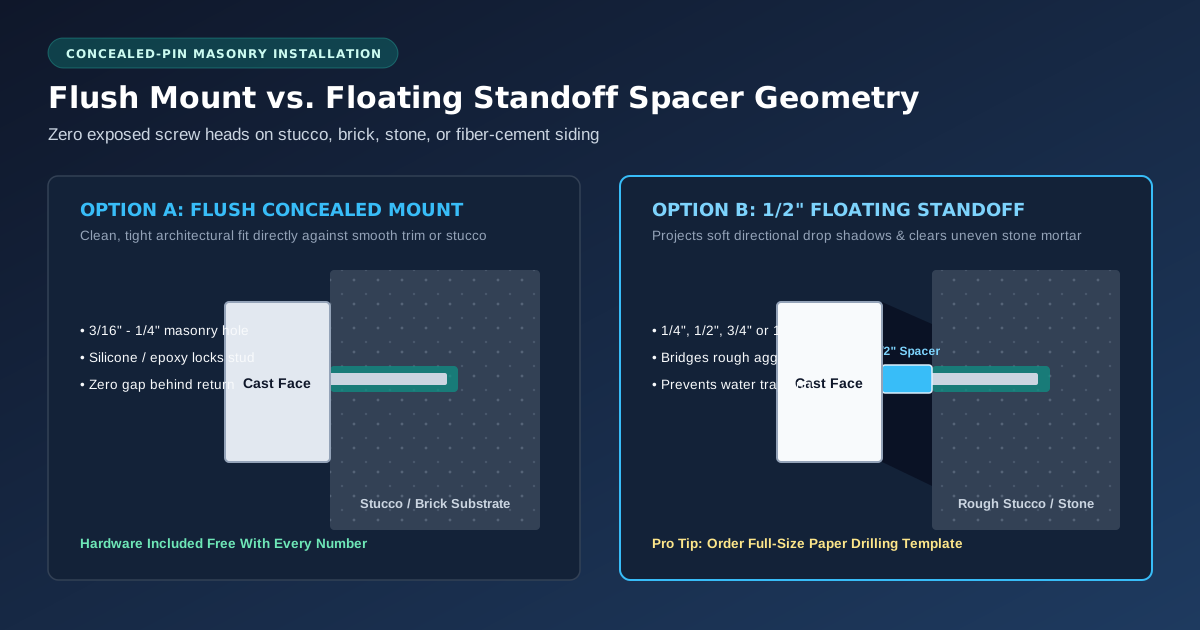
Step-by-step masonry bit sizing, mortar-joint vs. brick-face drilling, structural silicone adhesive tips, and 1/4" to 1" floating standoff shadows.
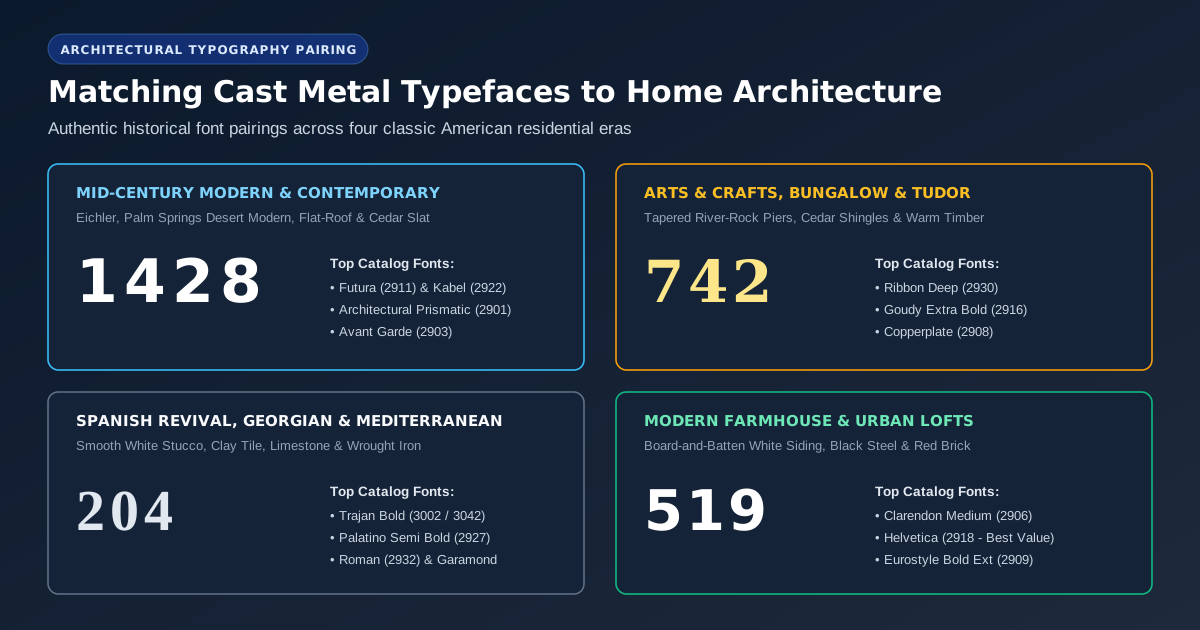
From Paul Renner’s geometric Futura on mid-century post-and-beam homes to Ribbon Deep and Trajan Bold on Craftsman and Mediterranean facades.
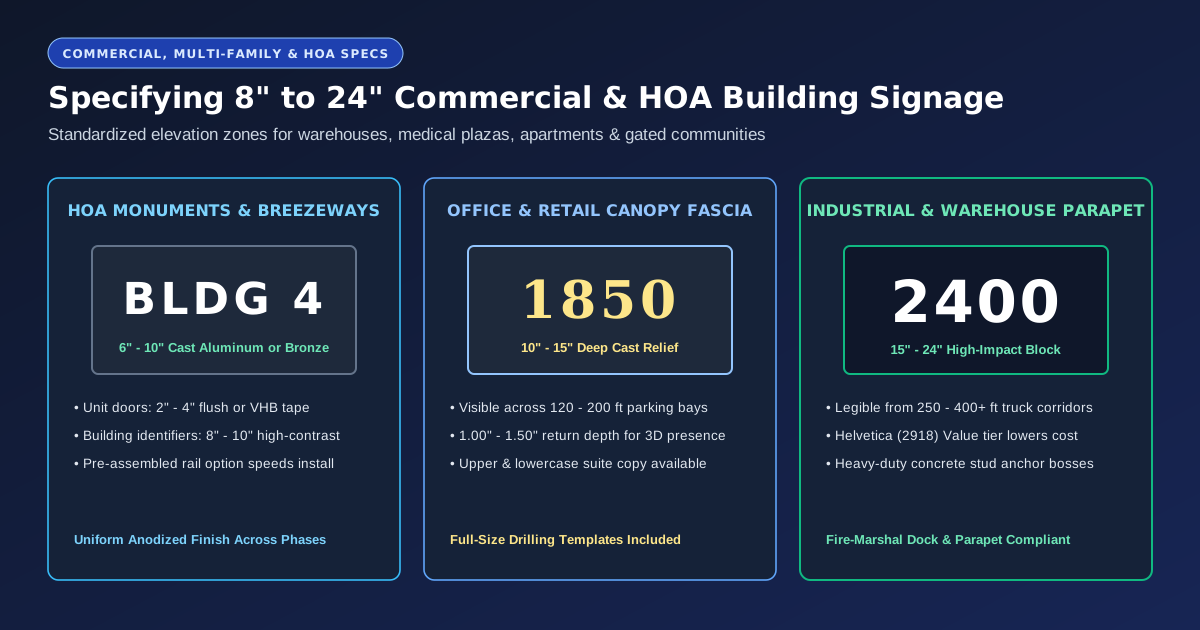
How architects, general contractors, property managers, and HOA boards standardize 8" to 24" cast metal signage across multi-building developments.
Price any combination of 2" to 24" cast metal or precision-cut letters online, or speak directly with our signage team Monday–Friday (8:30am–5:00pm PT).